Benefits of Meditation for best outcomes
Brief overview of meditation and its benefits
Meditation is a practice used for centuries to practice mindfulness and cultivate emotional, mental, and physical health. The practice is focused on training the brain to remain focused in chaotic situations and to focus on the present moment. An individual's choice to meditate involves setting aside a few minutes and focusing on breathwork, a visualization, or a mantra. It helps reduce mental chaos, quiets the mind, and increases self-awareness.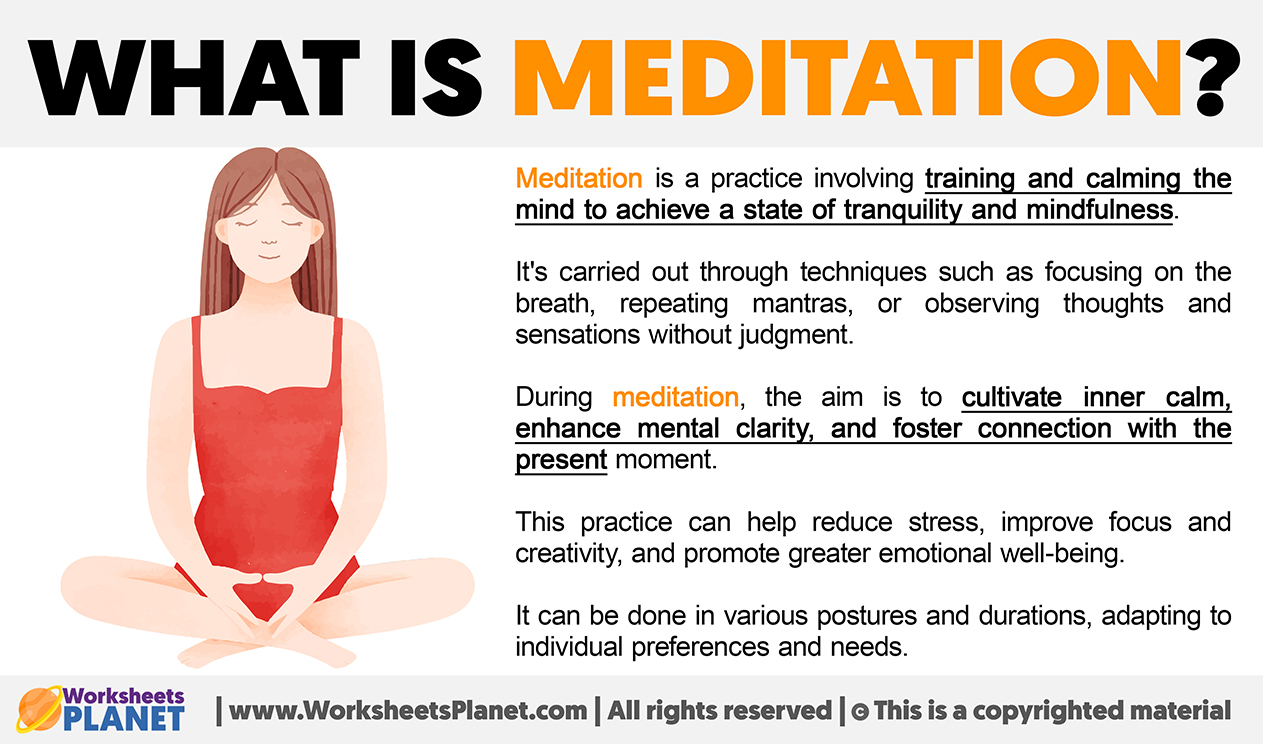
Meditation has countless benefits;
- Decreases Stress and Anxiety: meditation reduces the production of stress hormones like cortisol, leading to calm and relaxation.
- Improvement in focus and Mental Clarity: attention, focus, and concentration can be improved with regular meditation.
- Improves Emotional Intelligence: Meditation can increase self-awareness, emotional regulation, and empathy. It helps in making better relationships and decision-making.
- Improves happiness and mood: Meditation leads to increased production of neurotransmitters like serotonin, dopamine, and endorphins which are important for a positive mood.
- Improves Sleep Quality: with reduced stress and feelings of fatigue, sleep quality is also improved.
- Enhances Creativity and Productivity: Meditation helps boost creativity, imagination, and problem-solving skills.
 https://static.wixstatic.com/media/efee36_00925689584e41bc9cd934145e85c845~mv2.jpg/v1/fill/w_640,h_440,al_c,q_80,usm_0.66_1.00_0.01,enc_auto/efee36_00925689584e41bc9cd934145e85c845~mv2.jpg
Importance of proper meditation techniques for beginners
1. Understanding Meditation
- Definition of meditation
Meditation is a systematic practice that involves training one’s mind to focus, relax to become more aware.
- Overview of different meditation practices
There are numerous styles and practices of meditation, well known of these are as follows;
- Mindfulness Meditation
It focuses on the present moment. This is achieved with the help of
- Breath awareness,
- A body scan helps scan the body for stress and pain.
- Walking meditation: it involves being attentive to the sensation of each step.
2. Loving-Kindness Meditation (Metta Meditation)
it focuses on the feeling of love, kindness, and compassion for one's self, others, and all beings.
3. Transcendental Meditation
it focuses on using mantras to silence the mind to access the deeper state of consciousness.
4. Guided Meditation
it focuses on the use of guided audio or visual narrative that often focuses on Relaxation and stress relief, Visualization and manifestation, and Sleep improvement
5. Movement Meditation
It uses a combination of mindfulness and physical movements as
- yoga: Combines physical postures, breathing techniques, and meditation.
- Tai Chi: Slow, flowing movements to cultivate balance and harmony.
- Walking or running: Focusing on the sensation of each step or breath.

-Benefits of regular meditation
When adopted regularly, it can help relieve stress and anxiety. Meditation can help control one’s mind. Meditation can train the brain to stay calm in chaos, to find peace in times of pain, and to find silence in loud.
2. Getting Started with Meditation
Choosing the Best Time to Meditate
The potential of meditation can be unlocked when it is timed rightly. Research has shown that the impacts of meditation are defined by the chosen timings.
- Early Morning: starting the day with a 10-15 minute meditation session can help increase focus, clarity, and energy levels.
- Lunch Break: mid-day meditation (5-10 minutes) helps reduce stress, increase productivity, and refresh the mind.
- Before Bed: Winding down with a 10-20 minute meditation session helps calm the mind, and regulate sleep patterns.
Creating a Suitable Meditation Space
Any unpleasant, loud, and chaotic space can be transformed into peaceful and calm. The power lies in controlling the mind. The control comes from meditation.
Select a Quiet Corner: Entitle a quiet and private area, that is free from distractions.
Minimize Clutter: A clutter-free environment mirrors a clutter-free mind.
Soft Lighting: soft lighting can help set the tone for relaxation.
Comfortable Seating: Invest in comfortable, ergonomic meditation seating for back support that encourages good posture.
Technology-Free Zone: the meditation space should be a technology-free zone to minimize distractions.
A comfortable meditation space ensures that your physical body is at ease, allowing the mind to focus on the meditation practice. A distraction-free environment minimizes distractions that reduce mental chatter and mind-wandering.
3. Basic Steps for Beginners
Step 1: Find a Comfortable Position
- Options for sitting or lying down
Sitting Options: Sitting allows alertness and focus.
- Cross-Legged
- Chair Sitting:
- Kneeling: Kneel on a cushion or mat.
Lying Down Options: Lying is an option for people with back pain, and joint or relaxation-focused meditations.
- Savasana: it involves lying on the back with arms and legs relaxed, eyes closed, and focus on your breath.
- Reclined Seated: Lie down on a comfortable surface, such as a couch or recliner, with your back supported and legs straight or slightly elevated.
- Importance of a relaxed yet alert posture
It all lies in the power of posture. A relaxed and alert posture is necessary for transformative and change-inducing meditation procedures. A relaxed yet alert posture is the key foundation for optimal; health and a better quality of life.
Step 2: Focusing Your Mind
- Techniques for concentration and letting go of distractions
Some common distractions during the process of meditation are
- Mind-wandering: Thoughts, worries, and mental chatter.
- Physical discomfort: Discomfort, pain, or tension in the body
- External noise: Noises, from external environment 4. Emotional turmoil: Strong emotions, such as anxiety, fear, or excitement.
There are proven techniques that can help let go of these distractions;
- Anchoring: Chit involves choosing a meditation object, such as the breath, a mantra, or a visualization, that can help anchor your attention to it
- Labeling: in case of a wandering thought or a distraction, the technique is to label it as thinking, pain, or noise. This will help bring attention back to the meditation object. 3. Body scan: it involves being aware of our physical body, starting from the crown of the head, down to the toes, releasing any tension or discomfort.
- Mindfulness of emotions: observe emotions without judgment. These emotions need to be passed with no effect on the mind and body.
- Distractions can be overcome with the creation of a more conducive environment.
The role of breathing in mindfulness
Breathing is deeply connected to our emotions, nervous system, and state of mind. In times of stress, breathing is shallow and rapid. Relaxation improves breathing. Meditation helps us become aware of our breathing patterns, we can thereby control our emotions, our state of mind, and overall well-being.
Step 3: Using Mindfulness Techniques
Explanation of mindfulness and its role in meditation
Mindfulness is the practice of being fully aware and present. It is about being aware of the current moment and engaged. It is about developing a non-judgmental attitude towards one's experiences.
Mindfulness serves as a foundation for a deeper and more meaningful practice. During meditation, mindfulness can help:
- Increase awareness: develop an understanding of their thoughts, emotions, and bodily sensations.
- Reduce mind-wandering: it can help reduce mind chatter and cluttering for a more focused mind.
- Enhance acceptance: it can help develop a non-judgmental attitude towards experiences, thus reducing stress.
- Boosts mood: Mindfulness can increase positive emotions and reduce symptoms of depression.
4. Exploring Different Meditation Techniques
Guided Meditation
It is one of the most powerful tools for relaxing, reducing stress, and increasing self-awareness. It is the process of meditation guided by a teacher, helping one to connect with his body and mind and to relax.
Resources for finding guided meditations
Apps
- Headspace
- Calm
- Insight Timer
- Meditation Studio
- Buddhify
Websites
- Mindful.org:https://www.mindful.org/
- UCLA Mindful Awareness Research Center:https://www.uclahealth.org/uclamindful
- Omvana: https://www.youtube.com/channel/UC2lhkpiTGTxT-0M97iSfBrw
- Rainy Mood:https://rainymood.com/
- Guided Meditation by Andrew Weil: https://www.youtube.com/watch?v=J-JrhRCHP6o
YouTube Channels
- The Mindful Movement: https://www.youtube.com/c/TheMindfulMovement
- Meditation Oasis: https://www.meditationoasis.com/
- Jason Stephenson - Sleep Easy Hypnosis:https://www.youtube.com/watch?v=4qNFzlvSEc0
- Michael Sealey:https://www.youtube.com/user/michaelsealey
5. Developing a Consistent Practice
Profound benefits can be experienced for mental, emotional, and physical well-being with regular practice.
The Importance of Consistency
- Habit formation: it helps in making meditation a part of life.
- Progress and growth: Regular practice can increase self-awareness, emotional regulation, and spiritual growth.
- Improved mental clarity: Consistency enhances focus, concentration, and mental clarity
- Reduced stress and anxiety: Regular practice reduces stress and anxiety.
Tips for Establishing a Consistent Practice
- Start small: Begin with short, manageable sessions (5-10 minutes)
- Schedule it: Make meditation part of your daily routine, just like brushing your teeth or taking a shower.
- Create a conducive environment: Designate a quiet, comfortable, and distraction-free space for meditation.
- Find a meditation partner: Practice with a friend or family member to increase accountability and motivation.
- Track progress: a meditation journal or app can help monitor progress.
6. Overcoming Common Challenges
- Difficulty Quieting the Mind
Ø Focus on breath, body sensations, or a guided meditation to calm the mind.
- Facing Physical Discomfort
Ø try different postures, cushions, or chairs to find a comfortable position.
- Lack of Focus
Ø try focusing on a specific object, such as the breath or a mantra.
- Feeling Restless or Fidgety
Ø Try movement meditation, such as yoga or tai chi, to release excess energy.
- Difficulty Relaxing
Ø Use progressive muscle relaxation techniques or visualization to calm the body and mind.
In the end, I would like to know.
Ø Do you meditate
Ø How has the experience been?
Ø Any challenges you have faced, different from the ones mentioned above?
External links
Here are some links that provide in-depth information on the power of meditation.
- Headspace: A popular meditation app that offers guided meditations and personalized progress tracking. www.headspace.com
- Insight Timer: A free meditation app that features a vast library of guided meditations and a timer for personal practice. insighttimer.com
- Mindful.org: A comprehensive website offering guided meditations, articles, and courses on mindfulness. www.mindful.org
- UCLA Mindful Awareness Research Center: A website featuring free guided meditations, including those specifically designed for stress, anxiety, and sleep. www.marc.ucla.edu
- The Mindfulness Project: A website offering guided meditations, articles, and resources on mindfulness and meditation. www.themindfulnessproject.com
- Calm: A meditation app that features guided meditations, sleep stories, and relaxing music. www.calm.com
- Meditation Studio: A website offering guided meditations, articles, and resources on meditation and mindfulness. www.meditationstudio.com
- Buddhify: A meditation app that provides guided meditations for various parts of your day, such as waking up or going to bed. www.buddhify.com
Further Reading

 https://exercise.co.uk/wp-content/uploads/2023/02/The-Social-side-of-Exercising-Main.jpg
